



Key Takeaways
- Streaming royalties average $0.003–$0.005 per stream on Spotify — solid supplemental income, not a standalone living for most artists
- Live performance is the highest-yield income source for most independent artists
- Sync licensing can generate $500–$50,000+ per placement depending on the project
- Most independent artists leave publishing royalties uncollected — register with a PRO and set up publishing admin before your next release
- Direct-to-fan revenue through Bandcamp and Patreon works when you have a real fanbase, not before
- Session work and producing for others is a legitimate income stream most performing artists ignore
- The common thread across all seven streams: the right relationships unlock income you can’t reach alone
Is it actually possible to make a living from music without a label?
Yes. But it requires treating music income as multiple streams running simultaneously, not one big check.
The label model used to bundle everything: recording budget, distribution, marketing, touring support. Artists got upfront resources and gave up ownership and a significant share of royalties in exchange. The independent model trades that upfront support for ownership and a wider margin on everything you generate yourself. Neither model is inherently better. They’re different bets.
What makes the independent model work is understanding each revenue stream, setting realistic expectations about what each one actually pays, and building the relationships that unlock access to the higher-paying end of each category.
Here are the seven income streams worth understanding.
1. Streaming royalties
Spotify pays roughly $0.003–$0.005 per stream. Apple Music pays closer to $0.007–$0.01. Tidal and Amazon Music fall somewhere in between.
What that means in practice: 100,000 streams on Spotify generates about $300–$500 in master royalties. To earn $50,000/year from Spotify alone, you’d need around 10–17 million streams annually. Very few independent artists hit that number.
That’s not a reason to dismiss streaming. It’s a reason to treat it as one layer in your income model, not the whole thing.
To get more from it: release consistently (the algorithm rewards regular output), push for playlist placement, and make sure you’re collecting your publishing royalties. Most independent artists collect only the master royalty and miss the composition royalty entirely. Those are separate income streams triggered by the same stream. Register with a PRO before you release, and set up publishing admin through your distributor or SongTrust.
One more streaming reality: the first few thousand streams on a new release almost never generate meaningful royalties. Streaming income compounds over time as you build catalog. An artist with 20 well-performing tracks across multiple years earns more from streaming than an artist with one big track. Catalog depth matters.
2. Live performance
For most independent artists, this is where the real money is.
A local artist playing small venues earns $200–$500 per night. A regional touring act with a genuine fanbase earns $1,500–$5,000 per show. A national touring act with a booking agent can earn $10,000+ per show. Corporate and private events pay even more (see Article 40 for that specifically).
The income structure at venues: venues offer a guarantee (flat fee regardless of attendance), a door deal (percentage of ticket sales), or a hybrid (guarantee against a percentage of door, whichever is higher). Guarantees are always better when you can get them. Door deals make sense when you’re confident you can drive attendance and the room is the right size. Never take a door deal at a room you can’t fill.
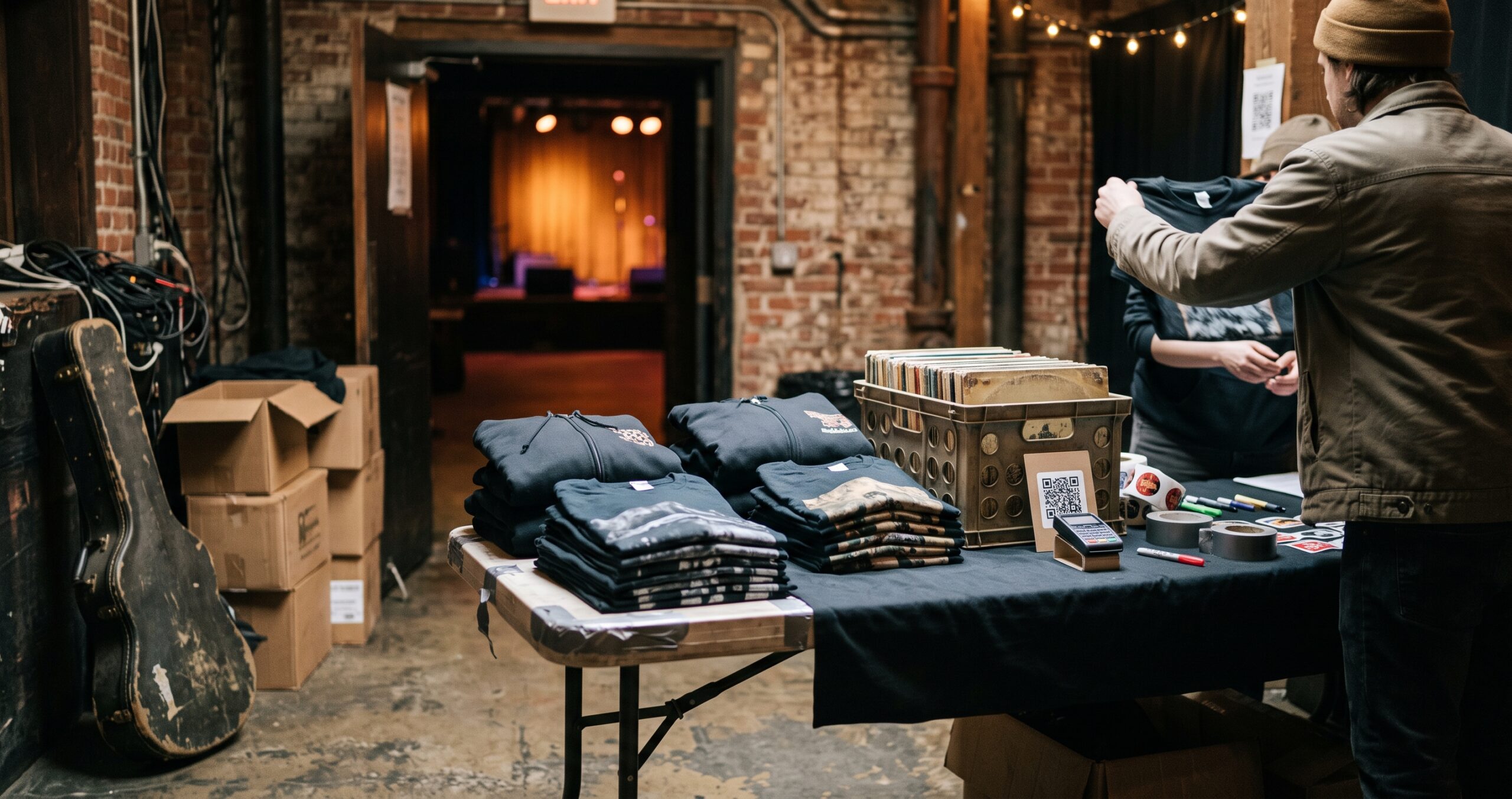
Merch at shows multiplies the income. An artist earning $800 from a guarantee at a mid-size venue and another $300–500 from the merch table is earning $1,100–$1,300 per show. That compounds across a tour.
When hiring a booking agent makes sense: when you’re consistently selling out shows at your level and ready to move into bigger rooms. Agents take 10–15% of your booking income. They’re worth it when they can get you into venues and markets you can’t access on your own. [LINK: Major Contacts — Booking Agents]
3. Sync licensing
Sync is when your music is licensed for use in a TV show, film, commercial, video game, trailer, or YouTube video. It generates two royalties: a sync fee (paid upfront by the production) and a performance royalty (paid by your PRO when the content airs or streams).
Sync fees vary enormously. An indie short film might offer $100–$500. A national TV commercial can pay $5,000–$50,000+. A Netflix series placement typically falls somewhere in between, often $2,000–$10,000 depending on the scene type and term of the license.
Two ways to get sync placements:
Active pitching: reaching out through a music supervisor contact or submitting directly to productions. This requires relationships. Music supervisors field hundreds of pitches; a personal relationship or a warm introduction makes the difference between landing in the delete folder and landing in the shortlist. [LINK: Major Contacts — Music Supervisors]
Passive library placement: through non-exclusive licensing libraries (Pond5, AudioJungle) or exclusive libraries (Musicbed, Artlist). Libraries pitch your music to their client base. You get a smaller cut, but you don’t have to manage the outreach.
For a track to be sync-ready: professional mix and master, a clean instrumental version available, no uncleared samples, and a split sheet filed. Missing any of these ends the conversation before it starts.
4. Merchandise
Merch margins are better than streaming and don’t depend on algorithmic placement.
Print-on-demand (Printful, Printify): no upfront cost, no inventory. Typical margin on a $35 shirt is $8–12. Good for online sales with no financial risk.
Batch ordering (100+ units from a local printer): typical margin on a $35 shirt is $15–20. Requires $700–$1,200 upfront per design and space to store inventory, but the economics improve significantly at volume.
What actually sells: t-shirts, hoodies (high ticket, high margin), hats. What underperforms consistently: mugs, phone cases, notebooks.
The merch table at live shows is your highest-conversion selling environment. People who just watched you perform are warm buyers. More shows equals more merch revenue. A credible design that people would wear regardless of whether they’re your fan outsells a name-and-logo shirt every time.
5. Publishing and royalty income
Most independent artists completely miss this.
When your music streams, plays on the radio, gets performed live in a licensed venue, or lands in a TV show, two royalties are triggered: one for the master recording (collected through your distributor) and one for the composition (collected through a PRO and publishing admin service).
PRO registration is free. ASCAP, BMI, and SESAC all operate in the US; you can only join one. Register every song you write, even before you know what will perform. Performance royalties from streaming are small per-stream, but they accumulate across years and territories.
Mechanical royalties from streaming require a separate publishing admin setup. Options: SongTrust ($250 one-time fee, 15% of what they collect), CD Baby Pro, DistroKid’s publishing arm, or a full publishing deal. If you’ve been releasing music without publishing admin, you have uncollected royalties sitting somewhere. Many collection societies hold these for a period before returning them to the pool. It’s fixable, but the window isn’t infinite.
6. Direct-to-fan revenue
Bandcamp lets fans pay above a minimum price for downloads, and you keep 80–85% of each sale. For an artist with a real fanbase, it’s one of the highest-margin income sources available.
Patreon works when you can offer consistent exclusive value: early music access, behind-the-scenes content, monthly live streams, direct Discord access. Artists with 500–1,000 real supporters at $5–10/month generate $2,500–$10,000/month. Some artists at the right scale earn more from Patreon than from touring.
The honest caveat: direct-to-fan revenue works after you have fans. Building it before you have an audience is a waste of time. Get the audience first, then monetize directly.
The other direct-to-fan lever is fan clubs and ticketed live streams. Platforms like Stageit and Veeps let artists charge for private live performances to their existing audience. For an artist with 5,000 real fans, a $15 ticketed livestream to 500 of them generates $7,500 before any costs. These work because the fans already exist.
7. Session work, co-writing, and producing
The income stream most performing artists overlook.
Session musicians earn $200–$1,000 per recording session. Top-call session musicians in LA or Nashville earn six figures from sessions alone. Mid-level session work at local studios or for independent artists can add $500–$2,000/month for someone who plays consistently and is professional to work with.
Co-writing generates income through publishing streams and also expands your network. Writing with more established artists gets your name in publishing credits on their releases. That means royalties and word-of-mouth credibility inside the industry. One co-write on a track that performs well can generate more publishing income than a year of solo releases.
Producing for other artists works on a flat fee model ($500–$5,000+ per track, depending on your profile) or a points model (a percentage of royalties from the finished release). Both are viable. Producers with strong credits can charge considerably more. The track record matters more than the rate.
What’s the realistic income picture?
An independent artist with their income optimized across these streams might look like this:
- Streaming: $500–$2,000/month (catalog of 20+ tracks performing consistently)
- Live performance: $2,000–$5,000/month (regional touring, 4–8 shows per month)
- Sync: $1,000–$5,000/month (active library placement plus occasional supervisor pitches)
- Merch: $500–$1,500/month (online and merch table combined)
- Publishing royalties: $200–$800/month (registered and collecting properly)
- Direct-to-fan: $500–$2,500/month (Patreon or Bandcamp with real supporters)
- Session/production: $500–$2,000/month (1–3 projects)
Total potential: $5,200–$18,800/month without a label. The spread is wide because the variables are real: genre, market, touring volume, catalog size, fanbase quality.
What to do first
If you’re starting from zero or trying to add a new revenue stream, here’s the order that makes practical sense:
- Set up publishing admin if you haven’t (the easiest overlooked income fix)
- Add merch to your website if you’re already playing shows (immediate, low-risk)
- Pitch 5–10 sync libraries with 5 of your best tracks, with instrumentals ready
- Start booking more shows through direct venue outreach or a booking agent
- Build an email list to enable direct-to-fan revenue as your audience grows
The common thread across all seven streams: the right relationship moves things faster than any strategy. The music supervisor contact, the booking agent connection, the A&R rep who knows your name. These change what’s available to you.
Major Contacts gives you verified direct contact information for every professional category that affects your income: booking agents, music supervisors, A&R reps, radio promoters, and more. Start with the free email templates and use them to open the doors that move money.