




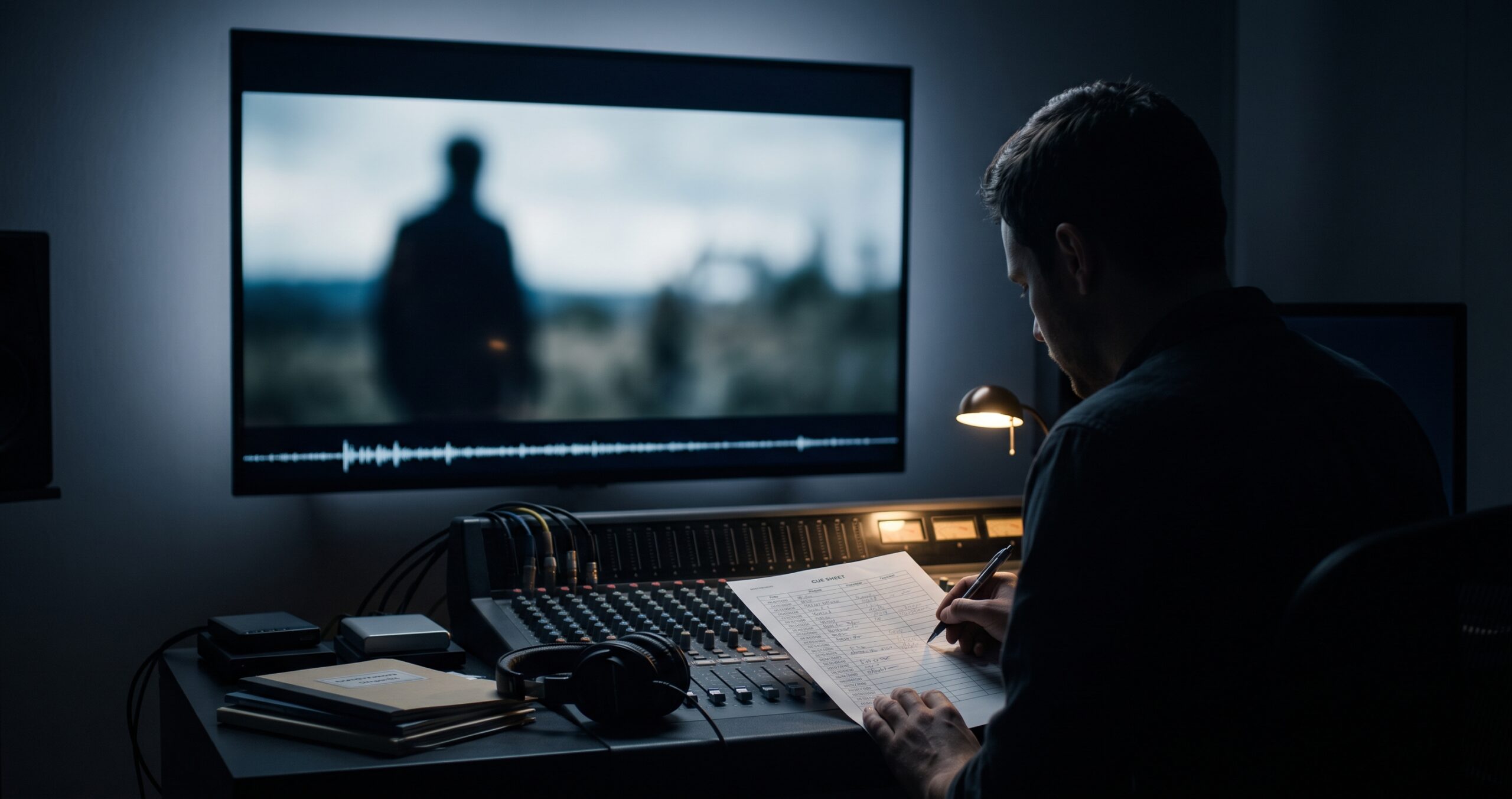
What Does a Music Supervisor Do — and How Do You Get Your Music in Front of One?
A music supervisor selects, licenses, and clears music for film, TV, advertising, and video games. They sit between the creative vision of a director or showrunner and the legal machinery of music licensing. If you want your song in a scene on Netflix or a major ad campaign, the music supervisor is the person who either opens the door or closes it. Getting in front of them is possible. Doing it wrong gets you ignored permanently.
What Music Supervisors Actually Do Day-to-Day
The title sounds simple. The job isn’t. A music supervisor on a mid-budget TV drama might be receiving 200-300 song pitches per week while simultaneously clearing music that was already selected, negotiating sync license fees, managing composer relationships, and hitting episode-by-episode deadlines. They’re not sitting around waiting to discover new artists.
Their primary responsibilities:
- Spotting a script or cut of a project to identify where music goes and what it needs to accomplish
- Searching for songs that fit specific scenes emotionally, tonally, and within the show’s established sound
- Clearing rights, which means licensing both the master recording and the underlying composition separately
- Negotiating fees with rights holders (labels, publishers, artists, estates)
- Managing music budgets, which can range from a few thousand dollars on an indie film to hundreds of thousands on a major network series
- Working with composers on original score
The licensing side is what most artists don’t think about. Every sync placement requires two licenses: one for the master recording (whoever owns the recording, typically the artist or their label) and one for the publishing (whoever controls the composition, typically the songwriter or their publisher). If you own both, the music supervisor only needs to talk to one person. That’s a meaningful advantage as an independent artist.
What Makes a Song “Sync-Ready”
Music supervisors have real criteria. This isn’t subjective taste. A song that sounds great on an album might be completely unusable for sync without changes or additional documentation.
Clean masters
If your master contains any sample that isn’t cleared, it’s a liability. Music supervisors will not place a track that contains an uncleared sample, no matter how good it sounds. They’ve had productions shut down over this. One well-known indie hip-hop track got pulled from a major network show in post-production because the producer hadn’t cleared a 2-second drum break. That kind of thing ends professional relationships fast. If you have uncleared samples, get them cleared or make clean versions.
Stem availability
Supervisors often need to pull individual elements of a song. An instrumental mix, a vocal-up mix, an a cappella version. If you can only provide the full stereo mix, you’re limiting the ways your track can be used. Store your stems. Export alternate mixes when you finish a record.
Metadata that’s actually correct
Your files need embedded metadata: song title, artist name, ISRC code, BPM, key, and contact information. If a supervisor downloads your track and the file is named “track01_final_FINAL.wav” with no embedded info, it goes in a discard pile. Metadata is not optional. Use a tool like MP3Tag or your DAW’s export settings to embed this before you send anything.
Publishing is registered
You need a PRO registration (ASCAP, BMI, or SESAC in the US). Your composition needs a publisher of record or you need to be registered as your own publisher. If a supervisor wants to use your music and your publishing isn’t registered, they can’t process the sync. Register everything before you start pitching.
You actually own the rights
This seems obvious. It isn’t. If you recorded on a major label contract or through a production deal, you may not control your masters. Know exactly what you own before you represent to a supervisor that you can license it. Misrepresenting rights control is a fast way to burn a relationship and potentially create legal exposure.
How to Find Music Supervisors to Pitch
The gatekeeping is real but it’s not impenetrable. Supervisors are findable. You just have to do the research rather than blasting cold pitches to anyone with a contact form.
IMDB Pro
IMDB Pro lists music supervisors by project. You can look up shows or films you think your music would fit and find out who supervised them. A subscription costs around $150/year and is one of the better investments you can make if sync is a serious goal.
Guild of Music Supervisors
The GMS (guildofmusicsupervisors.com) maintains a directory of working supervisors. Many list their contact information or preferred submission process. Start there before cold emailing anyone.
Music licensing databases and services
Services like Music Gateway, Musicbed, Artlist, and Marmoset act as intermediaries between artists and supervisors. Getting your catalog placed on a reputable sync licensing platform gives supervisors a searchable, pre-vetted database to work from. The sync fees are lower than a direct placement, but the volume can be significant.
Major Contacts
A service like Major Contacts (majorcontacts.com) provides direct contact information for music industry professionals including music supervisors. If you want to pitch directly rather than through an intermediary, having verified contact details matters. Cold outreach without verified contacts is mostly wasted effort.
Follow the credits
Watch the shows and films you’re targeting. Read the end credits. Music supervisors are listed. Google their names. Find their company websites. Many publish submission guidelines. Read the guidelines before you contact them.
How to Pitch a Music Supervisor Without Getting Ignored
Most pitches supervisors receive are wrong for them before the supervisor even listens. The work happens before you hit send.
Target specifically
A supervisor who works on procedural crime dramas does not want your ambient electronic music. A supervisor who works on documentary films isn’t looking for pop hooks. Study the projects they’ve worked on. If your catalog doesn’t fit, move on to someone it does fit. Mass-blasting every supervisor you can find is a reputation problem, not a strategy.
Keep your pitch short
One or two sentences about why you’re reaching out and why your music is relevant to their work. A streaming link (SoundCloud or Dropbox, not an attachment). Your contact information including publishing details. That’s the pitch. It should fit in six to eight lines of text.
Reference the actual project
If you’re pitching someone because you heard your track would work well in a show they’re currently supervising, say that specifically. “I heard [Song Title] on an episode of [Show]” or “I think [your track] fits the tone of [Show] Season 2 based on the sound you used in [specific episode]” shows you’ve actually done your homework. Generic praise for a supervisor’s “impressive body of work” lands in the trash.
Make it easy to say yes
Provide a direct streaming link to the specific track, not your whole discography. Mention that you hold both master and publishing rights and that the track is sample-free. State your preferred contact and that you can provide stems on request. Every barrier you remove increases the chance of getting a response.
Follow up once
If you don’t hear back in two to three weeks, one follow-up is professional. Two follow-ups starts to feel like pressure. Three means you’re on a mental blacklist. Send the follow-up, move on, and come back in six months with something new.
What Sync Pays
Fees vary significantly. A local TV placement might pay $500-2,000 for master and sync combined. A network drama placement can run $5,000-15,000 per song. A national ad campaign can reach $50,000-100,000 or more for a popular track. These aren’t guarantees; they’re ranges.
The more valuable dynamic is that a well-placed sync generates PRO performance royalties long after the license fee is paid. A song that appears in a show that streams globally for years keeps generating backend income. The initial placement fee is often less important than the show it’s placed in.
Key Takeaways
- Music supervisors clear two licenses per song: master and publishing. If you own both as an independent artist, you’re easier to work with than signed acts
- Sync-ready means: uncleared samples removed, stems available, metadata embedded, PRO registration complete, rights confirmed
- Research supervisors by looking at the credits of specific projects you’re targeting, not by mass-blasting a list
- IMDB Pro and the Guild of Music Supervisors directory are starting points for finding contact information
- Pitches should be short, specific, and easy to act on. Reference the actual project, not generic compliments
- Follow up once, then move on. Persistence reads as harassment in this business
- Sync licensing platforms like Musicbed, Artlist, and Marmoset can generate placements at lower fees but higher volume
- The backend PRO royalties from a long-running show can outperform the upfront license fee over time