



How to Find Co-Writers and Songwriting Collaborators in the Music Industry
You find co-writers by going where they already are: co-writing camps, publishing company networks, platforms like SoundBetter and Vocalize, and direct outreach to writers whose work you respect. Most productive co-writing relationships start from a simple, specific ask. The hard part isn’t finding collaborators, it’s learning how to make a session work and what to do with the song when it’s done.
Why co-writing matters (and when it’s the right move)
Some of the best songs ever written came from a room with two or three people who brought different strengths. One person has the melody instinct. One has the lyric precision. One has the production ear. That combination produces things a single writer would spend weeks trying to force alone.
Co-writing also builds your network in a way that almost nothing else does. A session with a writer who’s signed to a major publisher puts you in that publisher’s orbit. A session with a producer who’s placed songs on TV means you’re one step closer to a sync opportunity. The song is the output, but the relationship is often the longer-term asset.
That said, co-writing isn’t for every artist. If you’re a singer-songwriter with a distinct personal voice and you care about keeping that voice entirely yours, writing with someone can dilute it. Know what you want before you walk into a session.
Where to find co-writers
Co-writing camps
Co-writing camps are multi-day sessions where writers are paired up and expected to produce songs. Major labels, publishers like ASCAP and BMI, and even some independent organizations run them. ASCAP hosts the ASCAP Songwriting Workshop multiple times a year. Nashville’s community runs informal camps constantly. Some camps are invitation-only; others accept applications.
Getting into a camp puts you in front of working writers, and the structured environment removes the awkward “what should we write about” problem. You show up, get paired, and write.
Publishing company networks
If you’re signed to or affiliated with a music publisher, your publisher will set up co-writes as part of the deal. That’s one of the main things they’re supposed to do for you. If you’re not signed anywhere, it’s still worth reaching out to independent publishers directly. Some work with outside writers on a per-song basis.
Platforms for finding collaborators
- SoundBetter: Originally for session musicians, but now has songwriters and lyricists. Good for finding writers with specific skills.
- Vocalize: Built specifically for musicians and co-writers. You can post projects, browse profiles, and pitch yourself as a collaborator.
- Kompoz: More community-based. Writers post projects and invite contributions.
- Major Contacts: Direct contact info for working songwriters, producers, and publishing executives. Useful when you’re trying to reach established writers directly rather than through a platform.
Direct outreach to writers you respect
This works more often than artists expect. If you’ve listened to a writer’s catalog, know their style well, and can articulate why you think you’d write well together, send a direct message. Not on Twitter. Find a real email or reach out through their management or publisher.
Keep it brief. “I’ve been writing in [genre], your work on [specific song] resonates with the direction I’m going. I’d love to set up a session if you’re open to it.” That’s the whole message. If they want more context, they’ll ask.
How a co-writing session actually works
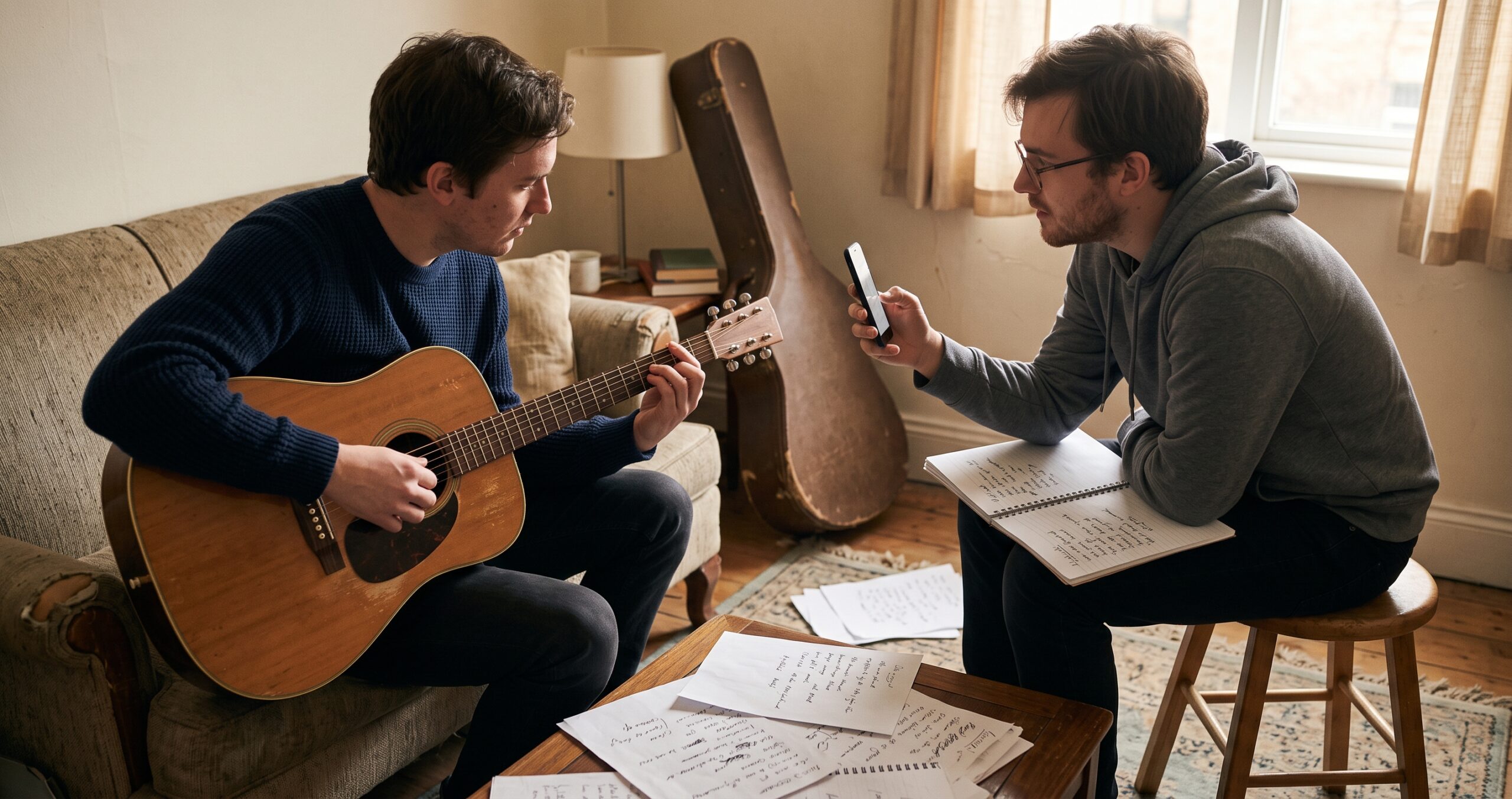
A standard co-write session runs 3-4 hours. The goal is to leave with at least a solid first draft, sometimes a finished demo. Here’s what the process typically looks like:
- Bring something in. Show up with a title, a concept, a melody fragment, or a chord progression. A blank room kills sessions. Even a rough idea gives you a starting point.
- Establish the concept early. The first 15-30 minutes should settle what the song is actually about. Specificity matters: “she left and I’m sad” is a topic, not a concept. “I keep calling her number even though I know she won’t pick up” is a song.
- Write a chorus first. Not always, but often. If you can land the hook, the rest of the song reveals itself. If you write a great verse first and the chorus doesn’t match, you’ve painted yourself into a corner.
- Leave your ego at the door. Your best line might get cut. Their best idea might not feel right to you. Both things can be true. The song wins.
- Demo before you leave. Even a voice memo of the hook with a rough guitar or piano part gives everyone something to reference. Memories of sessions fade fast.
How splits work in co-writes
Splits are how you divide songwriting royalties between the writers. There are two main buckets:
- Writer’s share: The percentage of performance royalties each writer collects through their PRO (ASCAP, BMI, SESAC).
- Publisher’s share: The other half of performance royalties, collected by whoever holds the publishing rights (either a publisher or the writer themselves if they’re self-published).
In a two-person co-write, the default split is 50/50. Three writers usually means 33/33/33 or a negotiated split based on contribution. That negotiation happens at the end of the session, or ideally before it starts.
If a producer contributes melodic or lyrical ideas in the session (not just a beat they brought in), they often get a writer’s split. If they’re just providing a track with no melodic or lyrical contribution, they get a producer fee or a master-side split, not a songwriter split. This distinction matters legally and financially, and it gets messy when you don’t settle it in the room.
A few principles that save headaches later:
- Agree on splits the day of the session. Don’t leave it open.
- Get it in writing. A text message confirmation is better than nothing. A split sheet is better than a text.
- A split sheet signed by all parties is your evidence if a dispute comes up later. Free templates are available through ASCAP, BMI, and Songtrust.
How to pitch a co-write session
Pitching a session to a working writer is different from pitching your music to a curator. You’re not asking them to do you a favor. You’re asking them to spend a day making something together, which means your pitch needs to explain why they’d benefit from that day.
What makes a good session pitch:
- Your specific sound and where you’re going with it (one sentence)
- Why you think your styles would work together (reference something specific in their catalog)
- What you bring to the table (your artist platform, your audience, your production capabilities, or just a strong melodic sense)
- A flexible ask: “If you’re ever open to a session, I’d love to make it happen” rather than “Can we schedule something for next Tuesday?”
If you’re earlier in your career, being honest about that isn’t a weakness. Many working writers enjoy sessions with developing artists, especially if the artist has something fresh to offer. The sessions that become the most interesting songs often involve a writer at a completely different career stage than their co-writer.
What to do with the song after the session
This is where a lot of independent artists drop the ball. You write a great song in a session, walk out feeling good, and then nothing happens because nobody agreed on who was doing what next.
Before you leave the session, agree on:
- Who’s producing the full demo? If a producer was in the room, it’s usually them. If not, who’s handling it?
- Is this going toward a specific artist’s project? If one writer is an artist and plans to record it, the others need to know.
- Is anyone pitching it for placement? For sync, TV, other artists? Who has the right to pitch?
- What’s the timeline? “Let’s see how the demo sounds in two weeks” is better than leaving it open-ended.
If you’re the artist who wrote the song and you plan to record it, register it with your PRO as soon as you have a final version. Log the split sheet. If you’re pitching to other artists or to sync libraries, make sure every co-writer has confirmed the pitch in writing first. Sending a song out for placement without the other writers knowing is the fastest way to burn a relationship in this industry.
Building a co-writing network that actually works
One good session doesn’t build a writing career. A consistent practice of sessions, follow-ups, and maintained relationships does. The writers who get placements are usually the ones who have 10-15 writers they cycle through regularly, not the ones searching for a new partner every time.
After a good session: follow up within a few days, share the demo, and keep the door open for the next one. If the song goes somewhere, credit the people you wrote it with publicly. That kind of professional generosity gets remembered.
If a session didn’t click, you don’t have to force another one. Not every writer partnership works. Chemistry in a writing room is real and it’s not always predictable. Move on without drama.
Key takeaways
- Co-writing camps, publisher networks, SoundBetter, Vocalize, and direct outreach are all legitimate ways to find collaborators. Each has a different barrier to entry.
- Show up to a session with a concept, title, or fragment. Never blank.
- Splits default to equal division. Get them agreed on and written down the same day.
- A producer gets a songwriter split only if they contributed melody or lyrics, not just a beat.
- Before leaving the session, agree on who produces the demo, who owns the song, and who can pitch it.
- Register finished songs with your PRO and keep your split sheet.
- The writing relationship matters as much as the song. Treat it accordingly.