



How to Book a Recording Studio as an Independent Artist (Without Wasting Money)
The short answer: research before you book, know exactly what you need, and never walk into a session unprepared. Most independent artists waste studio time because they treat booking like buying a gym membership. You pick the cheapest one nearby and show up. That’s how you burn $500 on two hours where nothing usable comes out. Studio time is one of the most expensive purchases in your music career. Here’s how to make it count.
What Kind of Studio Do You Actually Need?
Not every session requires the same setup. A bedroom producer tracking vocals needs something completely different from a band recording live drums. Start by being honest about what you’re actually recording.
There are three general tiers you’ll encounter:
Project studios are typically run by one engineer out of a converted room or home studio. Rates start around $30-60/hour. Equipment varies wildly. Best for: vocals over pre-made beats, rough demos, spoken word.
Mid-level commercial studios run $75-200/hour and usually include a proper control room, live room, and an in-house engineer. This is where most independent artists should be recording full songs.
Major studios (Capitol, Electric Lady, etc.) start at $200-500+/hour with world-class gear and rooms. Most indie artists don’t need this and can’t justify the spend. There are exceptions, but they’re rare.
Be skeptical of any studio that won’t tell you their rates upfront. Rate transparency is a basic professional standard.
How to Research a Studio Before Booking
Studios are not interchangeable. The room you record in will affect the sound of your record. Here’s what to actually look at:
Listen to records made there
Every studio worth booking has a client list or portfolio. Find it. Listen to at least three records made there. Does the low end feel tight or muddy? Do vocals sit naturally in the mix? You’re auditioning the room as much as the engineer.
Check the gear list seriously
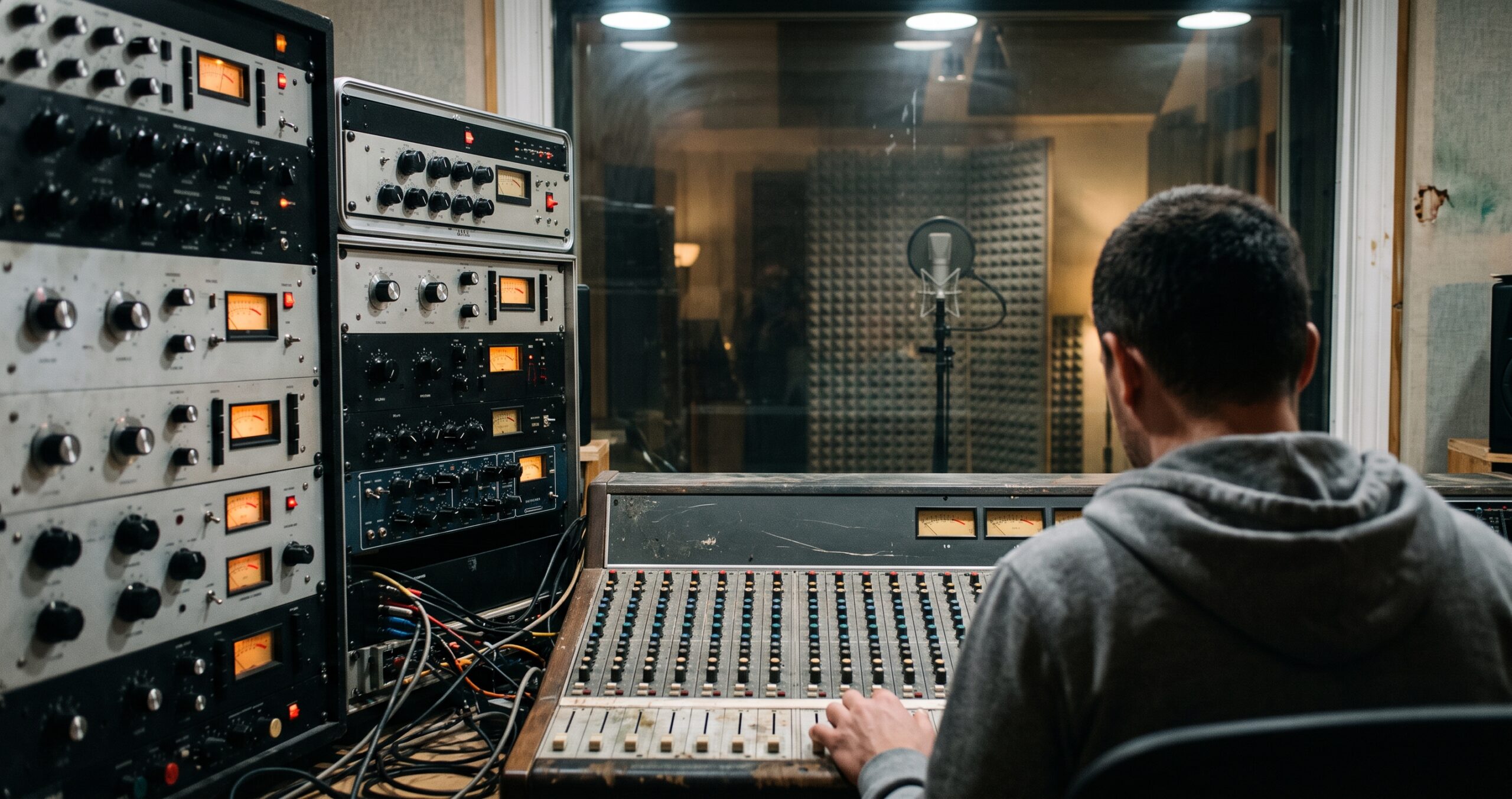
You don’t need to memorize every spec, but you should know what microphones they have on hand (for vocals, a Neumann U87 or AKG C414 is a standard), whether they have the DAW you’re working in, and what outboard gear they’re running on the mix bus. If the studio lists its gear on the website, that’s a good sign. If it doesn’t, ask.
Ask about the engineer
In many project studios, the room and the engineer are the same person. In commercial studios, you may be assigned whoever is available. Ask specifically who will be in the room with you. Their credits matter. Someone who’s engineered 50 indie hip-hop records will serve you differently than someone whose background is in jingles and corporate video.
Visit before you book
If you’re planning to spend more than a few hundred dollars, go see the space first. A studio tour is free and it tells you things that no website can: how the control room actually sounds, whether the gear is maintained, how the engineer communicates. If they won’t let you visit, move on.
Understanding Rate Structures
Studio pricing is less standardized than most people expect. Here’s what you’ll actually encounter:
Hourly rate: The most common. The clock starts when you walk in. Every minute counts.
Block rates: Many studios offer discounts for booking 10+ hours upfront. A studio at $100/hour might offer a 10-hour block for $800. If you’re doing a full EP, this is usually smarter than booking session by session.
Day rates: Some studios offer 8-10 hour day rates. These can be significantly cheaper per hour than the standard rate. If you have a clear idea of what you need and you’re organized, a full day can be extremely productive.
Lock-out rates: You rent the studio for days or weeks, 24/7 access. Used by major artists who want privacy and continuity. Not relevant for most independent artists unless you’re producing a full album and need to store your session and return to it over time.
Always ask: does the rate include the engineer? Some studios separate the room fee from the engineering fee. A $75/hour room with a separate $50/hour engineer is actually $125/hour. Read the breakdown before you assume.
How to Prepare for a Recording Session
This is where most artists lose money. Time in the studio is not time to write, arrange, or figure out what you want the song to sound like. That work should be done before you arrive.
1. Finalize your parts before the session
If you’re a vocalist, know your lyrics cold. Record yourself rehearsing at home. Listen back critically. The vocal you do in rehearsal the day before is basically the vocal you’ll do in the booth. Don’t book studio time to “see how it goes.”
2. Prepare your files
If you’re bringing a beat or a session file, export your stems organized, labeled clearly, and at the right sample rate (44.1 kHz / 24-bit is standard for most studios). Bring it on a USB drive and upload it the night before if the studio allows remote file sharing. Wasted time setting up your session at $100/hour is painful.
3. Know your reference tracks
Bring 2-3 songs that represent what you want your finished record to sound like. Not because the engineer will copy them. Because it saves 20 minutes of back-and-forth trying to describe “that warm but punchy sound” in abstract terms.
4. Keep your crew small
Bring the people who need to be there. Every additional body in the room creates distraction, social pressure on your performances, and longer breaks. An entourage is not a studio asset.
5. Eat before. Sleep before.
Obvious, but frequently ignored. Your ears and your voice will both perform better. If your session runs late, you’ll have the stamina to stay focused.
Finding the Right Fit: Questions to Ask Before You Book
Before committing to any studio, ask these directly:
- What’s included in the hourly/block rate (engineer, mixing, mastering)?
- What DAW do you primarily work in?
- Can I hear examples of vocal recordings done in this room?
- What’s the cancellation/rescheduling policy?
- Do you offer mixing as a separate service, and what’s the rate?
- Is there a lockout available if I need to come back to the session?
A studio that gets annoyed by these questions is a studio that isn’t used to professional clients. That’s information worth having.
Red Flags to Watch For
Not every studio is what it appears online. Watch for:
No published gear list or client credits. If they can’t show you who they’ve worked with, you have no way to evaluate the work.
Vague pricing. “Rates vary” without a starting number means you won’t find out what it costs until you’re committed.
An engineer who talks more than listens. The session is about your music. An engineer who spends 20 minutes explaining their own career isn’t focused on yours.
Gear that looks unused or dusty. If the outboard rack looks like it hasn’t been touched in a year, it probably hasn’t been maintained properly either.
No written booking agreement. Any serious studio has a basic studio agreement. If they’re booking on a handshake, you have no recourse if the session goes sideways.
One More Thing Worth Knowing
Some of the best records made by independent artists in the last decade were cut in mid-level studios nobody has heard of. The room matters. The engineer matters. Your preparation matters. The name on the door does not. A $200/hour session with a great engineer who understands your sound will produce a better record than a $500/hour session in a brand-name studio with an engineer who’s half-checked out.
Book the studio that fits the music. Not the one that will look best in the caption.
Key Takeaways
- Research studios by actually listening to records made there, not just looking at photos of the gear
- Always confirm whether the hourly rate includes the engineer or if it’s a separate charge
- Block rates and day rates almost always offer better value than hour-by-hour booking
- Prepare your parts, files, and reference tracks before you step into the booth
- Visit the studio before committing to anything over a few hundred dollars
- A mid-level studio with a great engineer beats a major studio with an indifferent one every time
- Ask direct questions about gear, the engineer’s background, and cancellation policies before you book
Visit www.majorcontacts.com for a list of recording studios to choose from